A Swiss-Army Knife for Your Pain
A Swiss-Army Knife for Your Pain
Physical Therapy for Chronic Pain: Building a Swiss-Army Knife of Tools for Relief
Physical Therapy for Chronic Pain: Building a Swiss-Army Knife of Tools for Relief
January 14, 2026
January 14, 2026
When you’re dealing with complex or long-standing pain, it’s rarely coming from one single issue. This is something I talk about often with patients in my Oak Park physical therapy practice, especially those who have tried “everything” and still feel stuck. Pain tends to be layered. It has a history. It’s influenced by past injuries, stress, sleep, movement habits, and how your nervous system has learned to protect you over time.
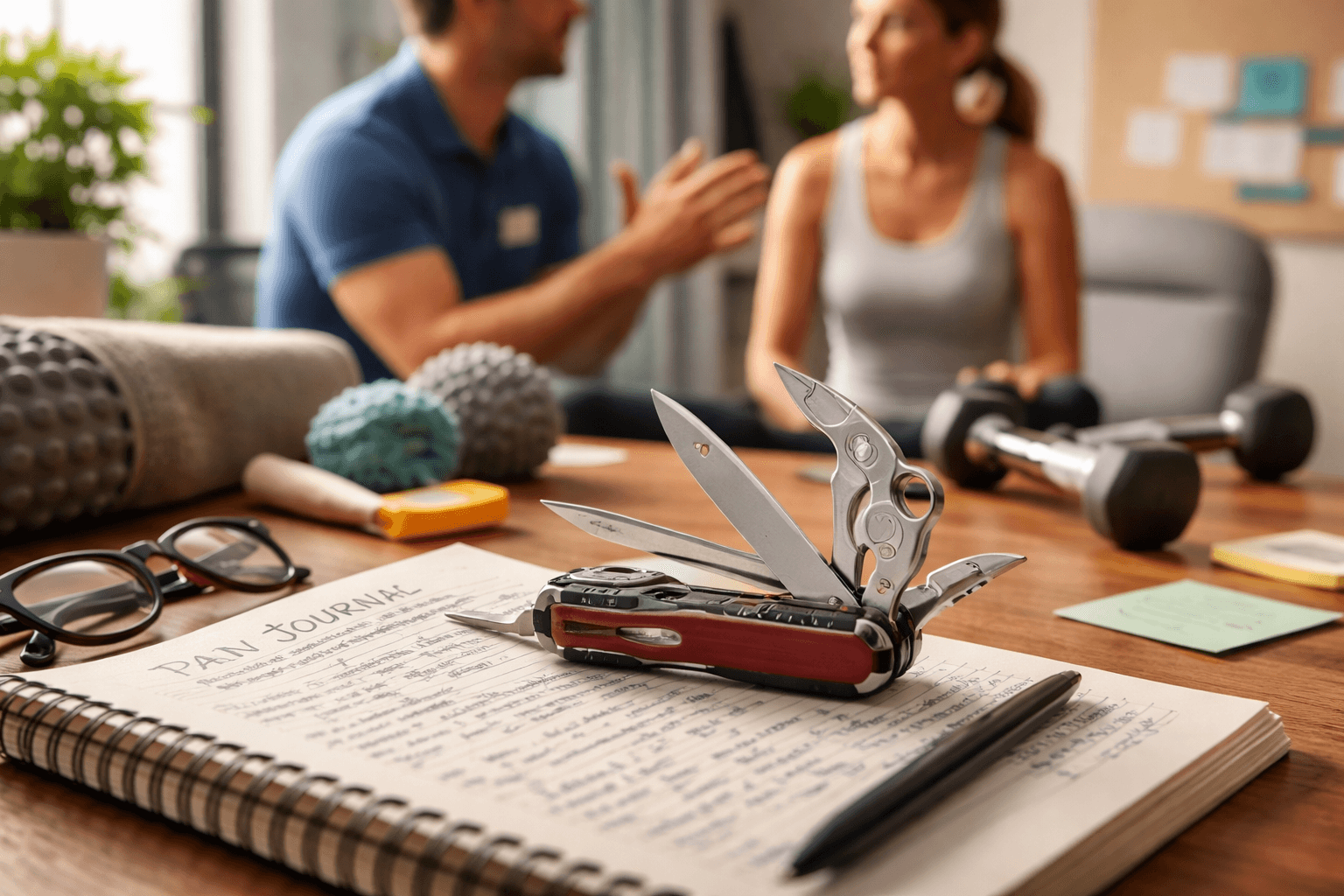
Because of that, one of the first things I’ll often suggest is starting a simple pain journal. Not to track every ache or spiral into symptoms, but to notice patterns. When does the pain show up? What makes it worse? What helps, even a little? These conversations become the foundation of how we approach physical therapy together, whether you’re coming in from Oak Park, Chicago, or somewhere nearby.
What we usually uncover is that pain can come from a mix of things: an old injury that never fully resolved, a nervous system that’s become extra sensitive, stress that keeps the body’s alarm system turned up, or movement patterns that once made sense but are now limiting you. None of this means your body is broken. It means it adapted. And adaptations can change.
That’s where the idea of a Swiss-Army knife comes in.
Why One Tool Is Rarely Enough for Chronic Pain
Many people arrive in physical therapy hoping for the thing. The perfect stretch. The magic exercise. The one adjustment or cue that finally fixes it. That makes sense. Pain is exhausting, and simple answers are appealing.
In reality, persistent pain responds much better to a flexible toolkit than a single solution. Think about how you actually move through your day. You sit, stand, walk, lift, breathe, think, worry, relax, sleep, rush, slow down. Pain shows up in all of those contexts. So our approach has to meet you there too.
My role as a physical therapist isn’t just to give you exercises. It’s to help you build a repertoire of tools you can draw from depending on what your body and nervous system need in that moment. Some days that might be movement. Other days it might be calming things down. Sometimes it’s about building strength or tolerance. Sometimes it’s about reassurance and reframing what you’re feeling.
That flexibility is what gives people back a sense of agency.
Tool One: Understanding Your Pain
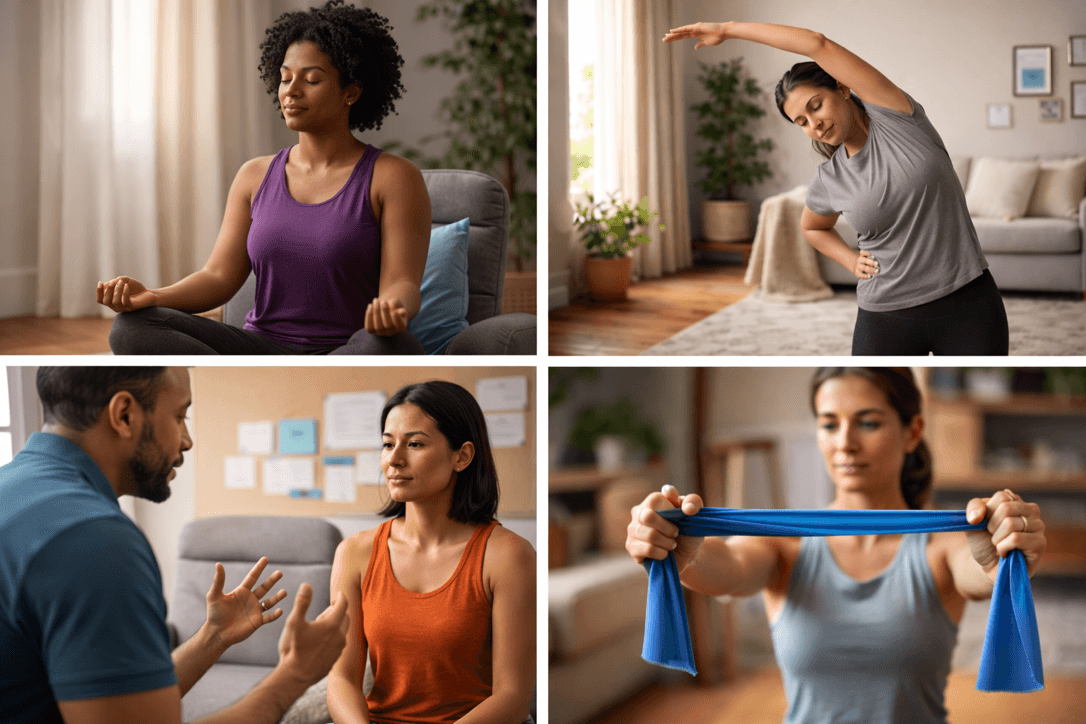
Education is foundational. When you understand what pain is and what it is not, it often becomes less threatening. That doesn’t mean the sensation disappears overnight, but it changes your relationship to it. I recently had a patient who told me as we were discussing the roots of her pain that she actually felt her shoulders decreasing in tension. Now, this doesn't always happen, but it was proof that education is therapy.
We spend time talking about how the nervous system processes threat, how past experiences influence present symptoms, and why pain does not always equal damage. This is especially important for chronic pain conditions where imaging or tests don’t fully explain the intensity of symptoms.
When pain feels unpredictable and dangerous, the body tightens and guards. When pain feels understandable and workable, the system often softens. That shift alone can create meaningful change.

Tool Two: Movement That Builds Trust
Movement is a powerful input for the nervous system, but only when it’s dosed appropriately. For some people, that means starting very gently. For others, it means challenging old limitations in a structured way.
We focus on movements that are relevant to your life. Getting out of a chair. Walking without bracing. Returning to the gym. Playing with your kids. Sitting at work without constant tension. The goal is not perfect form. The goal is confidence and adaptability. Consistency oftentimes wins out over intensity as we begin building trust around movement.
Over time, movement becomes less about fixing a body part and more about teaching your system that it can handle load, variety, and change.

Tool Three: Strength and Capacity
Strength training often gets oversimplified in pain conversations, but it plays an important role. Strength builds capacity. Capacity creates options. When your body has more options, it doesn’t have to rely on the same protective patterns over and over again.
This isn’t about pushing through pain or ignoring signals. It’s about gradually expanding what your system can tolerate. We pay attention to pacing, recovery, and how your symptoms respond over time. Strength becomes one tool in the kit, not the whole kit.

Tool Four: Breathing and Nervous System Regulation
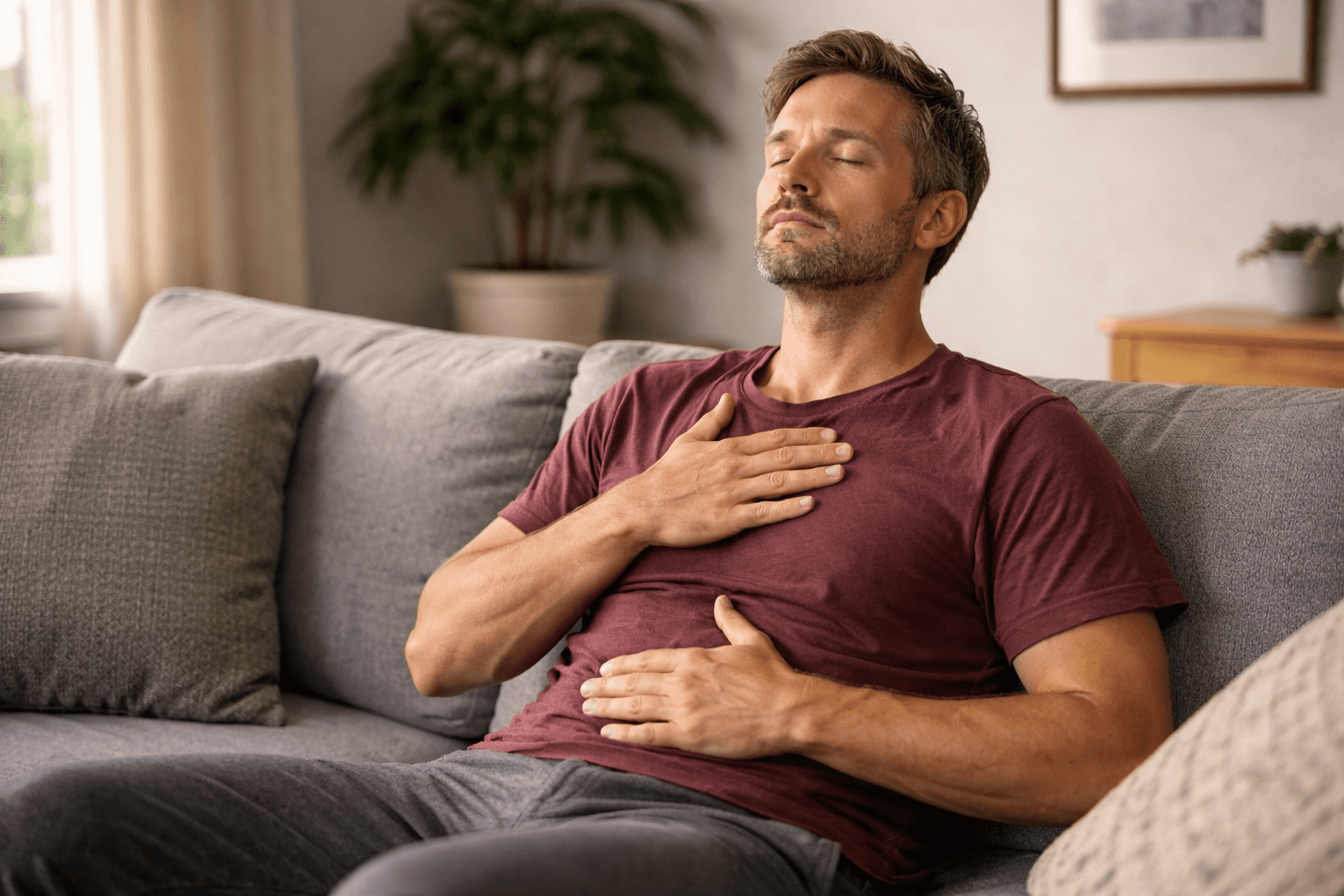
Breathing is always happening, but how you breathe matters. Slower, more intentional breathing can send a powerful signal of safety to the nervous system. This is especially helpful when pain is tied closely to stress, anxiety, or flare-ups that seem to come out of nowhere.
We use breathing and regulation techniques not as a way to avoid pain, but as a way to create space around it. When the alarm system quiets down, other tools tend to work better too.
Tool Five: Mindfulness and Awareness
Mindfulness in physical therapy doesn’t always mean sitting on a cushion or clearing your mind. It means learning to notice sensations without immediately reacting to them. That skill is incredibly useful when pain has been running the show.
By practicing awareness during movement, daily activities, and flare-ups, patients often discover that pain is less rigid than it once seemed. There is more variability. More choice in how to respond. That awareness becomes a tool you can use anywhere, not just in the clinic. The way one can practice that awareness oftentimes comes through meditation - the honing of attention to respond in a non-judgmental and curious way. This can oftentimes lead to insights about one's internal world that they did not expect and, at the very least, help give them a tool for their toolbox to respond to pain differently.

Tool Six: Reframing Setbacks
Flare-ups happen. Plateaus happen. That does not mean you’re back at square one. One of the most important tools we build is the ability to interpret setbacks differently.
Instead of seeing a bad day as proof that nothing is working, we look at it as information. What changed? What might your system need right now? Which tools make sense to use today?
This mindset reduces fear and keeps people moving forward, even when progress isn’t linear.
How This Comes Together in Physical Therapy
In my practice, physical therapy for chronic pain is collaborative. We experiment. We adjust. We pay attention to what actually helps you function better in your real life.
Over time, the goal is not dependence on appointments. The goal is confidence. Confidence that you have options. Confidence that pain is something you can work with rather than something that controls you.
A Swiss-Army knife isn’t useful because it has one perfect blade. It’s useful because it has many tools, each suited for a different situation. Pain management works the same way.
If you’re dealing with ongoing pain and feel stuck cycling through the same strategies without lasting relief, a broader, more flexible approach may be what’s missing. Building a personalized toolkit takes time, but it’s one of the most reliable ways I’ve seen people reclaim function, trust their bodies again, and get back to the things that matter to them.
When you’re dealing with complex or long-standing pain, it’s rarely coming from one single issue. This is something I talk about often with patients in my Oak Park physical therapy practice, especially those who have tried “everything” and still feel stuck. Pain tends to be layered. It has a history. It’s influenced by past injuries, stress, sleep, movement habits, and how your nervous system has learned to protect you over time.
Because of that, one of the first things I’ll often suggest is starting a simple pain journal. Not to track every ache or spiral into symptoms, but to notice patterns. When does the pain show up? What makes it worse? What helps, even a little? These conversations become the foundation of how we approach physical therapy together, whether you’re coming in from Oak Park, Chicago, or somewhere nearby.
What we usually uncover is that pain can come from a mix of things: an old injury that never fully resolved, a nervous system that’s become extra sensitive, stress that keeps the body’s alarm system turned up, or movement patterns that once made sense but are now limiting you. None of this means your body is broken. It means it adapted. And adaptations can change.
That’s where the idea of a Swiss-Army knife comes in.
Why One Tool Is Rarely Enough for Chronic Pain
Many people arrive in physical therapy hoping for the thing. The perfect stretch. The magic exercise. The one adjustment or cue that finally fixes it. That makes sense. Pain is exhausting, and simple answers are appealing.
In reality, persistent pain responds much better to a flexible toolkit than a single solution. Think about how you actually move through your day. You sit, stand, walk, lift, breathe, think, worry, relax, sleep, rush, slow down. Pain shows up in all of those contexts. So our approach has to meet you there too.
My role as a physical therapist isn’t just to give you exercises. It’s to help you build a repertoire of tools you can draw from depending on what your body and nervous system need in that moment. Some days that might be movement. Other days it might be calming things down. Sometimes it’s about building strength or tolerance. Sometimes it’s about reassurance and reframing what you’re feeling.
That flexibility is what gives people back a sense of agency.
Tool One: Understanding Your Pain
Education is foundational. When you understand what pain is and what it is not, it often becomes less threatening. That doesn’t mean the sensation disappears overnight, but it changes your relationship to it. I recently had a patient who told me as we were discussing the roots of her pain that she actually felt her shoulders decreasing in tension. Now, this doesn't always happen, but it was proof that education is therapy.
We spend time talking about how the nervous system processes threat, how past experiences influence present symptoms, and why pain does not always equal damage. This is especially important for chronic pain conditions where imaging or tests don’t fully explain the intensity of symptoms.
When pain feels unpredictable and dangerous, the body tightens and guards. When pain feels understandable and workable, the system often softens. That shift alone can create meaningful change.
Tool Two: Movement That Builds Trust
Movement is a powerful input for the nervous system, but only when it’s dosed appropriately. For some people, that means starting very gently. For others, it means challenging old limitations in a structured way.
We focus on movements that are relevant to your life. Getting out of a chair. Walking without bracing. Returning to the gym. Playing with your kids. Sitting at work without constant tension. The goal is not perfect form. The goal is confidence and adaptability. Consistency oftentimes wins out over intensity as we begin building trust around movement.
Over time, movement becomes less about fixing a body part and more about teaching your system that it can handle load, variety, and change.
Tool Three: Strength and Capacity
Strength training often gets oversimplified in pain conversations, but it plays an important role. Strength builds capacity. Capacity creates options. When your body has more options, it doesn’t have to rely on the same protective patterns over and over again.
This isn’t about pushing through pain or ignoring signals. It’s about gradually expanding what your system can tolerate. We pay attention to pacing, recovery, and how your symptoms respond over time. Strength becomes one tool in the kit, not the whole kit.
Tool Four: Breathing and Nervous System Regulation
Breathing is always happening, but how you breathe matters. Slower, more intentional breathing can send a powerful signal of safety to the nervous system. This is especially helpful when pain is tied closely to stress, anxiety, or flare-ups that seem to come out of nowhere.
We use breathing and regulation techniques not as a way to avoid pain, but as a way to create space around it. When the alarm system quiets down, other tools tend to work better too.
Tool Five: Mindfulness and Awareness
Mindfulness in physical therapy doesn’t always mean sitting on a cushion or clearing your mind. It means learning to notice sensations without immediately reacting to them. That skill is incredibly useful when pain has been running the show.
By practicing awareness during movement, daily activities, and flare-ups, patients often discover that pain is less rigid than it once seemed. There is more variability. More choice in how to respond. That awareness becomes a tool you can use anywhere, not just in the clinic. The way one can practice that awareness oftentimes comes through meditation - the honing of attention to respond in a non-judgmental and curious way. This can oftentimes lead to insights about one's internal world that they did not expect and, at the very least, help give them a tool for their toolbox to respond to pain differently.
Tool Six: Reframing Setbacks
Flare-ups happen. Plateaus happen. That does not mean you’re back at square one. One of the most important tools we build is the ability to interpret setbacks differently.
Instead of seeing a bad day as proof that nothing is working, we look at it as information. What changed? What might your system need right now? Which tools make sense to use today?
This mindset reduces fear and keeps people moving forward, even when progress isn’t linear.
How This Comes Together in Physical Therapy
In my practice, physical therapy for chronic pain is collaborative. We experiment. We adjust. We pay attention to what actually helps you function better in your real life.
Over time, the goal is not dependence on appointments. The goal is confidence. Confidence that you have options. Confidence that pain is something you can work with rather than something that controls you.
A Swiss-Army knife isn’t useful because it has one perfect blade. It’s useful because it has many tools, each suited for a different situation. Pain management works the same way.
If you’re dealing with ongoing pain and feel stuck cycling through the same strategies without lasting relief, a broader, more flexible approach may be what’s missing. Building a personalized toolkit takes time, but it’s one of the most reliable ways I’ve seen people reclaim function, trust their bodies again, and get back to the things that matter to them.
Chris Voirin
Chris Voirin
our journal
our journal
More insights for you.
More insights for you.
Explore more reflections, guidance, and practical tools to support your growth and well-being.
Explore more reflections, guidance, and practical tools to support your growth and well-being.
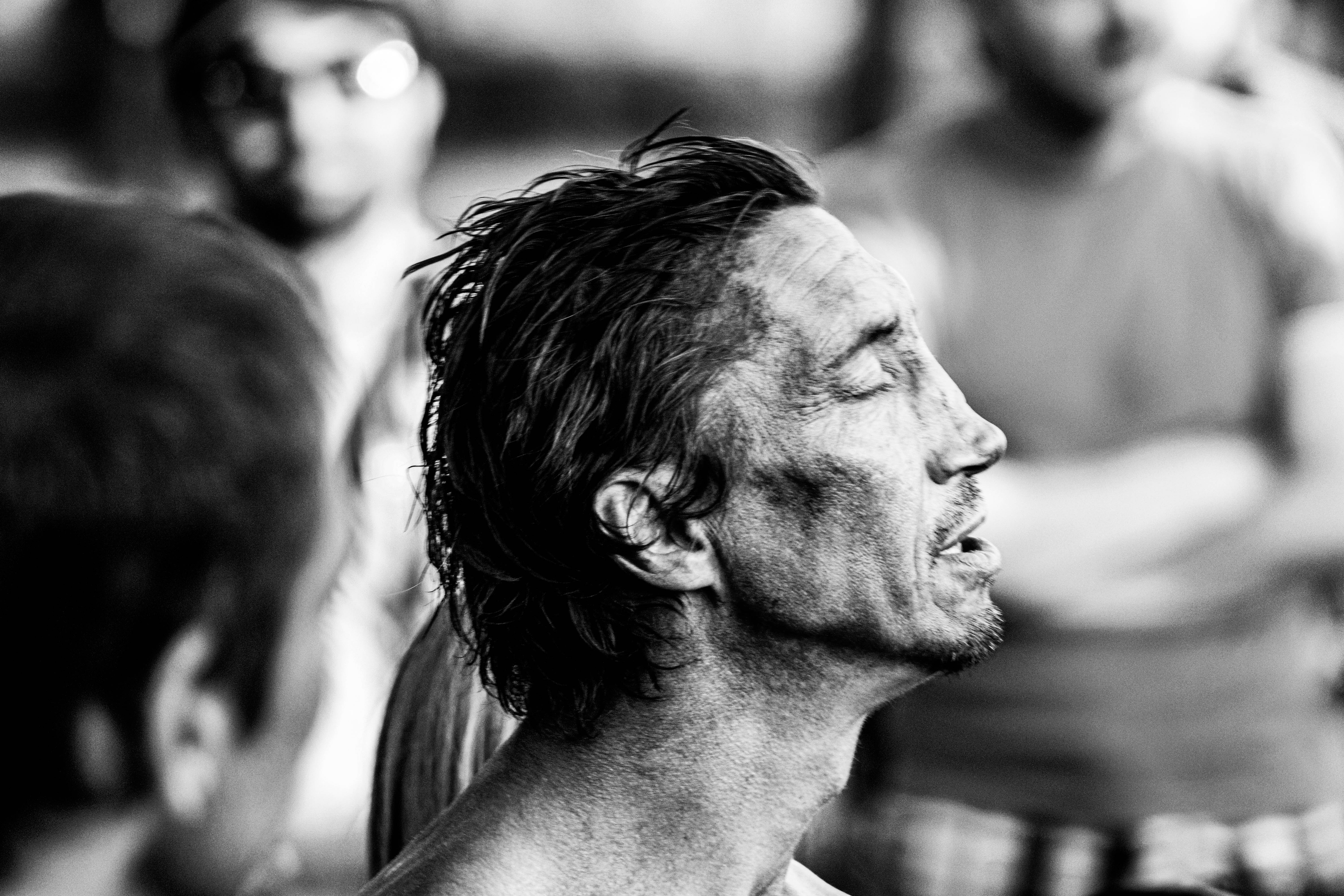
Pain isn’t just about tissues or injuries. It’s often a nervous system doing its best to protect you, and physical therapy can help that system learn when it’s safe to soften again.

Mindfulness-Based Physical Therapy, Mindfulness Classes and 1-on-1 Training is on the docket for 2026
Mindfulness-Based Physical Therapy, Mindfulness Classes and 1-on-1 Training is on the docket for 2026
Your questions.
Answered.
Not sure what to expect? These answers might help you feel more confident as you begin.
Didn’t find your answer? Send us a message — we’ll respond with care and clarity.
How is this different than other physical therapy practices?
We don’t just chase symptoms, we help you understand them and find the root cause. Most PT clinics will give you a list of exercises, send you home, and hope for the best. At Mindful Motion, we slow things down. We start by listening to your story, digging into the “why” behind your pain, and creating a plan that works for your life.
How is this different than other physical therapy practices?
We don’t just chase symptoms, we help you understand them and find the root cause. Most PT clinics will give you a list of exercises, send you home, and hope for the best. At Mindful Motion, we slow things down. We start by listening to your story, digging into the “why” behind your pain, and creating a plan that works for your life.
What can I expect from the first session?
What can I expect from the first session?
The first session is all about getting a thorough background, comprehensive analysis of your strength, flexibility, and mobility, and understanding your history with pain. You’ll talk with your PT about what brings you here, what's held you back in the past, and where you'd like to go.
Do you offer both online and in-person sessions?
Do you offer both online and in-person sessions?
Yes. Whether you prefer meeting face-to-face or from the comfort of home, we offer flexible options to meet you where you are.
What treatment strategies do you employ?
What treatment strategies do you employ?
Some of the skills which we will discuss and develop are listed below.
Graded and meaningful progression into safe movement and exercise based on your initial evaluation.
Education on Pain Neuroscience and how our understanding of pain and our nervous system plays a large role in our experience of pain.
Developing Mindfulness Meditation skills as a tool to calm the nervous system, relate to your pain differently, create a deeper understanding of your thoughts, emotions, and sensations to provide a fuller experience of daily life and deepen your presence.
Identifying and developing a plan surrounding your personal values which you would like to lead life by.
Other things which we will address are adequate sleep hygiene, appropriate aerobic exercise, working with acceptance of what is, and much more.
Why Mindfulness Meditation?
Why Mindfulness Meditation?
Depending on where you want to go in your therapy, Mindfulness Meditation can act as any number of things for you and your life. Let's start with some definitions.
Mindfulness is the purposeful ability to observe one's thoughts, feelings, and physical sensations without judgment, and to be fully present in the current moment
Meditation is the tool which we use to cultivate mindfulness in our daily lives.
Okay... so why mindfulness meditation for my recovery?
The implications of practicing Mindfulness Meditation with patience and persistence can be profound to your recovery from injury or pain. It can also have an impact to your contact to the present moment, your relationships to yourself and your thoughts, to your loved ones, and the world. You can learn to deal with stress, hardships, and the ups and downs of life with more equanimity.
We're taking your body to the gym by doing the exercises we prescribe. Why not also take your mind to the gym and help create lasting habits which can improve your quality of life?
Your questions.
Answered.
Not sure what to expect? These answers might help you feel more confident as you begin.
How is this different than other physical therapy practices?
We don’t just chase symptoms, we help you understand them and find the root cause. Most PT clinics will give you a list of exercises, send you home, and hope for the best. At Mindful Motion, we slow things down. We start by listening to your story, digging into the “why” behind your pain, and creating a plan that works for your life.
How is this different than other physical therapy practices?
We don’t just chase symptoms, we help you understand them and find the root cause. Most PT clinics will give you a list of exercises, send you home, and hope for the best. At Mindful Motion, we slow things down. We start by listening to your story, digging into the “why” behind your pain, and creating a plan that works for your life.
What can I expect from the first session?
What can I expect from the first session?
The first session is all about getting a thorough background, comprehensive analysis of your strength, flexibility, and mobility, and understanding your history with pain. You’ll talk with your PT about what brings you here, what's held you back in the past, and where you'd like to go.
Do you offer both online and in-person sessions?
Do you offer both online and in-person sessions?
Yes. Whether you prefer meeting face-to-face or from the comfort of home, we offer flexible options to meet you where you are.
What treatment strategies do you employ?
What treatment strategies do you employ?
Some of the skills which we will discuss and develop are listed below.
Graded and meaningful progression into safe movement and exercise based on your initial evaluation.
Education on Pain Neuroscience and how our understanding of pain and our nervous system plays a large role in our experience of pain.
Developing Mindfulness Meditation skills as a tool to calm the nervous system, relate to your pain differently, create a deeper understanding of your thoughts, emotions, and sensations to provide a fuller experience of daily life and deepen your presence.
Identifying and developing a plan surrounding your personal values which you would like to lead life by.
Other things which we will address are adequate sleep hygiene, appropriate aerobic exercise, working with acceptance of what is, and much more.
Why Mindfulness Meditation?
Why Mindfulness Meditation?
Depending on where you want to go in your therapy, Mindfulness Meditation can act as any number of things for you and your life. Let's start with some definitions.
Mindfulness is the purposeful ability to observe one's thoughts, feelings, and physical sensations without judgment, and to be fully present in the current moment
Meditation is the tool which we use to cultivate mindfulness in our daily lives.
Okay... so why mindfulness meditation for my recovery?
The implications of practicing Mindfulness Meditation with patience and persistence can be profound to your recovery from injury or pain. It can also have an impact to your contact to the present moment, your relationships to yourself and your thoughts, to your loved ones, and the world. You can learn to deal with stress, hardships, and the ups and downs of life with more equanimity.
We're taking your body to the gym by doing the exercises we prescribe. Why not also take your mind to the gym and help create lasting habits which can improve your quality of life?
Didn’t find your answer? Send us a message — we’ll respond with care and clarity.
Your questions.
Answered.
Not sure what to expect? These answers might help you feel more confident as you begin.
Didn’t find your answer? Send us a message — we’ll respond with care and clarity.
How is this different than other physical therapy practices?
We don’t just chase symptoms, we help you understand them and find the root cause. Most PT clinics will give you a list of exercises, send you home, and hope for the best. At Mindful Motion, we slow things down. We start by listening to your story, digging into the “why” behind your pain, and creating a plan that works for your life.
How is this different than other physical therapy practices?
We don’t just chase symptoms, we help you understand them and find the root cause. Most PT clinics will give you a list of exercises, send you home, and hope for the best. At Mindful Motion, we slow things down. We start by listening to your story, digging into the “why” behind your pain, and creating a plan that works for your life.
What can I expect from the first session?
What can I expect from the first session?
The first session is all about getting a thorough background, comprehensive analysis of your strength, flexibility, and mobility, and understanding your history with pain. You’ll talk with your PT about what brings you here, what's held you back in the past, and where you'd like to go.
Do you offer both online and in-person sessions?
Do you offer both online and in-person sessions?
Yes. Whether you prefer meeting face-to-face or from the comfort of home, we offer flexible options to meet you where you are.
What treatment strategies do you employ?
What treatment strategies do you employ?
Some of the skills which we will discuss and develop are listed below.
Graded and meaningful progression into safe movement and exercise based on your initial evaluation.
Education on Pain Neuroscience and how our understanding of pain and our nervous system plays a large role in our experience of pain.
Developing Mindfulness Meditation skills as a tool to calm the nervous system, relate to your pain differently, create a deeper understanding of your thoughts, emotions, and sensations to provide a fuller experience of daily life and deepen your presence.
Identifying and developing a plan surrounding your personal values which you would like to lead life by.
Other things which we will address are adequate sleep hygiene, appropriate aerobic exercise, working with acceptance of what is, and much more.
Why Mindfulness Meditation?
Why Mindfulness Meditation?
Depending on where you want to go in your therapy, Mindfulness Meditation can act as any number of things for you and your life. Let's start with some definitions.
Mindfulness is the purposeful ability to observe one's thoughts, feelings, and physical sensations without judgment, and to be fully present in the current moment
Meditation is the tool which we use to cultivate mindfulness in our daily lives.
Okay... so why mindfulness meditation for my recovery?
The implications of practicing Mindfulness Meditation with patience and persistence can be profound to your recovery from injury or pain. It can also have an impact to your contact to the present moment, your relationships to yourself and your thoughts, to your loved ones, and the world. You can learn to deal with stress, hardships, and the ups and downs of life with more equanimity.
We're taking your body to the gym by doing the exercises we prescribe. Why not also take your mind to the gym and help create lasting habits which can improve your quality of life?